|
·
Strong controllable braking
independent of hand position/signalling/cargo
·
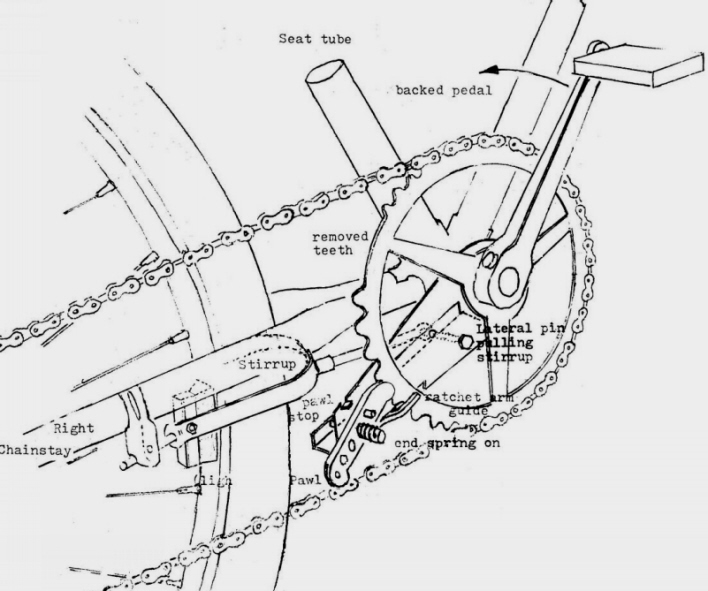
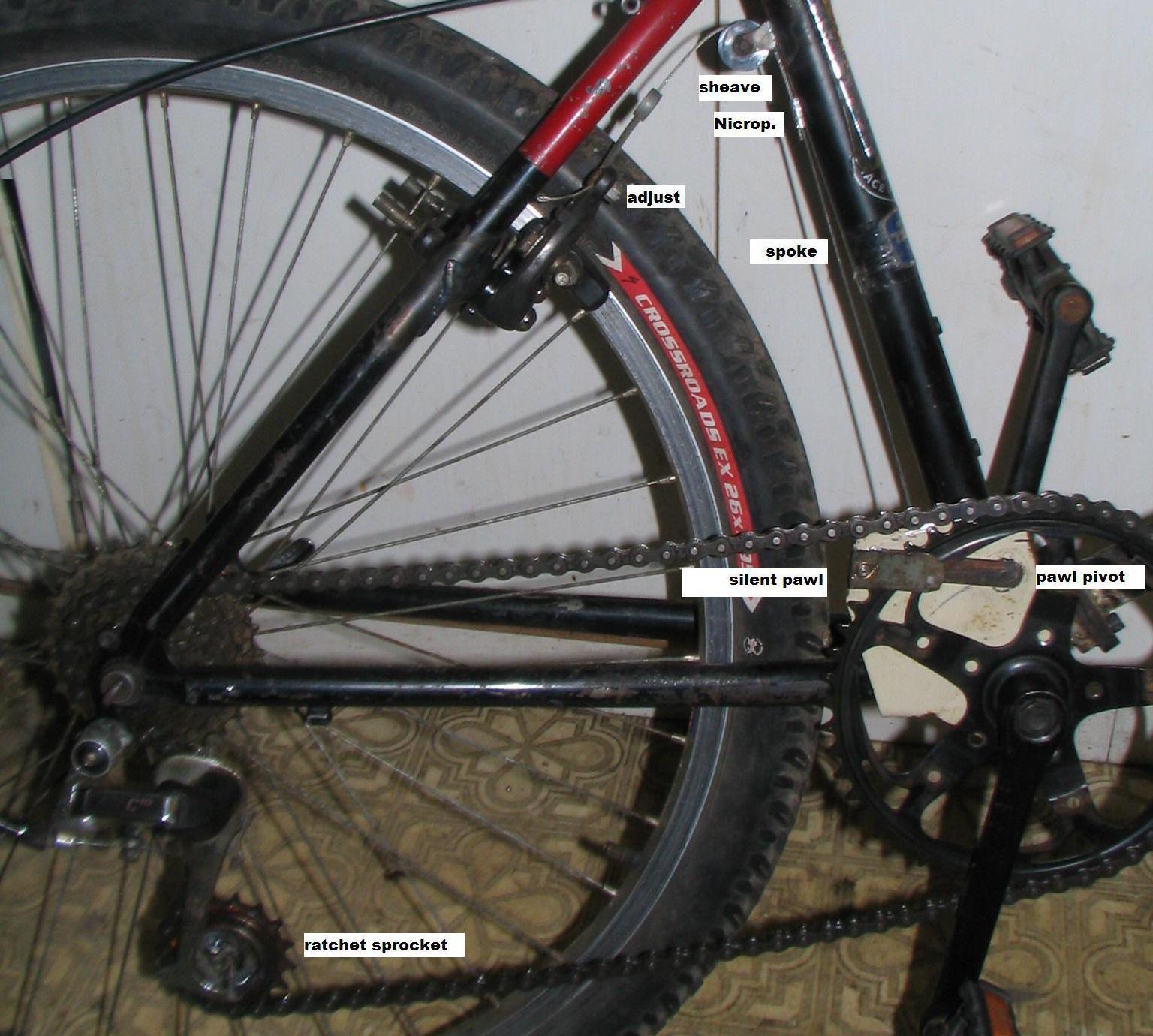
Ideal for backpedal
braking of rear derailleur gearing
·
For rear cable
or stirrup
brake (traditional English/Indian/Chinese bikes)
·
2 moving
parts very simple to make
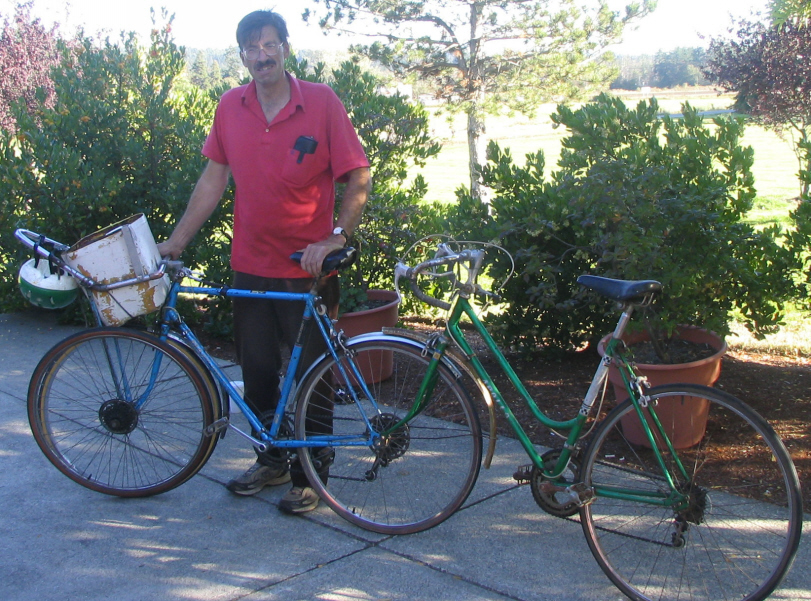
FARTHING PENNY Bucket
(Bouquet) Cargo Bicycle
·
Frame Carries a front
20L bucket of cargo with multi- pocket organiser
·
Small bike handling and
manoeuvrability with big bike power
·
Silent and powerful
backpedal braking with derailleur gearing
·
Handlebars rock for arm
power boost and lock in multiple positions
2012: Folding
ARM BOOST Bucket
BIKE
2018strong Arm
Assist CARGO Bike
ReCYCLE
Bike
Cargo Trailer
Compared to
car utility and boat trailers, bike 2 wheel trailers have a much narrower
wheelbase and less deadweight so it is
preferable to have the bottom at minimum ground clearance of say 4”
, (the same as the pedal). Otherwise with the good inclined cornering of
the bike a heavy (and high) load can easily flip the trailer. Even with
inflated wheels the shock on rigid trailer (and bucket) cargo is fairly
high so a suspension is useful to reduce the noise of loose cargo and
possible damage.
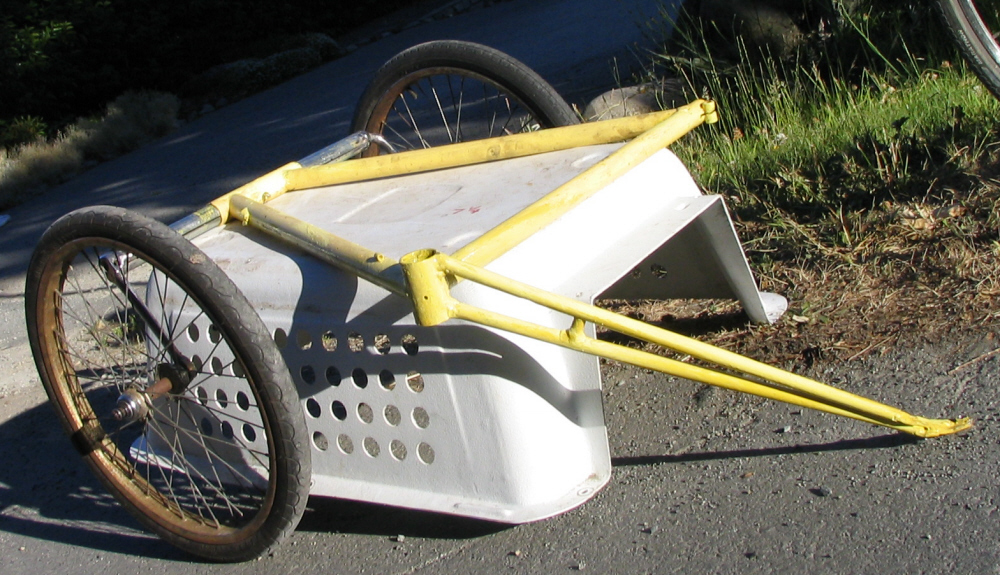
Remarkably these
desiderata, rarely achieved in
custom trailers, can be met with a
compact trailer weighing only 18 lbs and made entirely of cycle
components. An old bike frame makes a lightweight
trailer skeleton with an offset rising arm for loose vertical bolting to
your bicycle for short loads. The seatstays are cut off and rewelded to the
bottom bracket lugs of the removed chainstays to form this triangulated
arm.
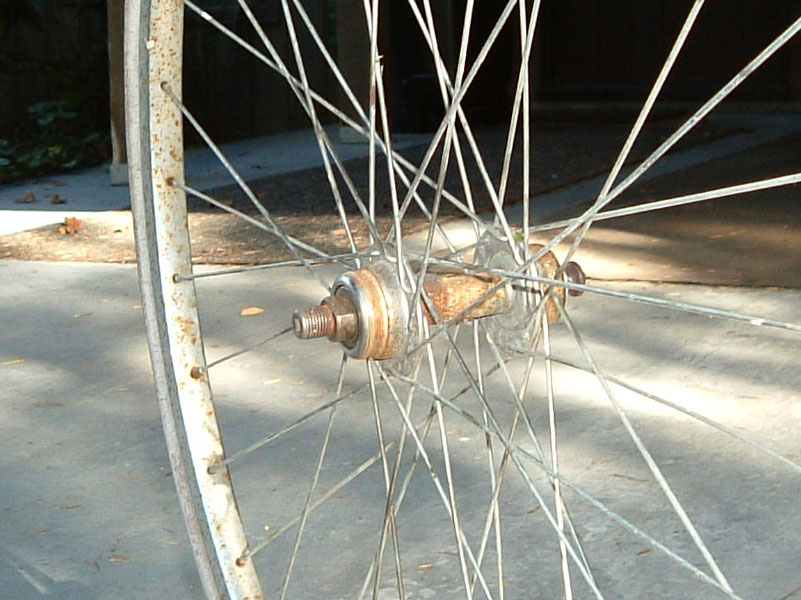
The trailer wheels
are 16” or 20” rear wheels with the axles replaced by pedal axles Make sure
you mount the wheels freewheel-side in, as they are dished, and mount the
lefthanded crank thread on the lefthand side. They are easily screwed onto
pedal cranks whose big ends are welded to the ends of (1" EMT
electrical conduit) tubing which passes through the head tube with a central locating pin.
This EMT is best slit lengthwise for torsional flexibility to give a
suspension to the extent the cranks are angled ahead. The cranks are
pointed up too to lower the frame below the wheel axles.
Multiple pin holes
in the frame allow adjusting the height and suspension effect between
straight ahead cranks for storage and max suspension for heavy fragile
loads to be cycled slowly to say 60 degree up cranks for light rugged loads
to be carried low and fast.
There are mainly
different styles of pedals. ½” or 9/16” interthreads and outer . 5/16 or
.278”(24 tpi) threads. One piece
cranks are always ½” and the right side often has a flaring at the axle
which is easy to weld to the EMT as is the big end of a standard
cranks. Front wheel axles are
5/16-24 so their threaded cones can used instead of the too-small pedal
outer cone on 5/16 pedal axle ends. The dirt cover can be pressed off and
replaced with a bigger one or the entire hub outer end covered.
A sleeve can drilled from 3/8 rear axle to
allow mounting the normal 3/8-24 thread rear cone on a .278” pedal. Chuck
the axle segment in a drill press and use a stationary center drill and
then H&J letter drills clamped in the table vice. Set those upright by
lightly chucking the wrong ends.
Tow-a-Bike to a Friend
This is an easy way to tow an empty
bicycle behind your bike, for instance to public transport to provide your
visitor with a bike. Basically the idea is to remove the front wheel of the
bike to be towed and carry it bolted on one side of your front fork. And
then mount the front fork of the rear bike over the ends of your rear axle
either directly or with some flat bar with holes for the axle and hose
clamps for the forks. The connection must be strong but allow the fork to
pivot to conform to bumps in the road. The empty rear bike will then tow
obediantly behind you with very little drag. The connection is not
strong or stiff enough to make this a tandem. Please don’t try
|